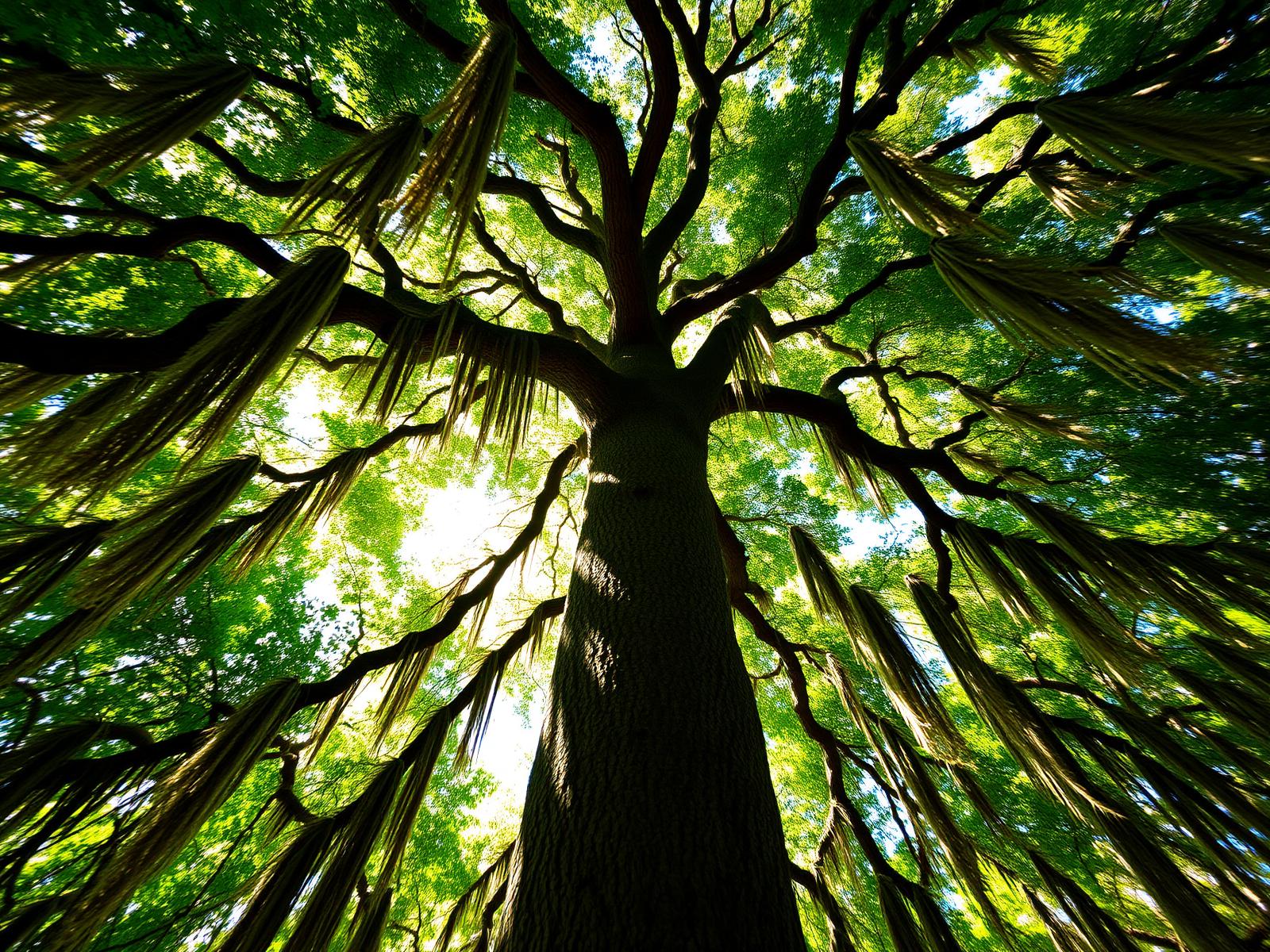
The space under a mature live oak is one of the hardest growing environments in Florida. It is shaded year-round, the surface root mat dominates the top six inches of soil, the leaf litter (duff) acidifies the soil to a pH around 5.5–6.0, and summer rainfall is mostly intercepted by the canopy before it reaches the ground. Most plants sold for 'shade' at Florida garden centers — impatiens, caladiums, even most ferns — fail under these conditions within a single season.
What follows is the working plant list we use when a Tree Rx client asks for landscape under an existing oak canopy. Every species on the list is native or naturalized in Florida, tolerates dry shade, and does not require disturbing the root plate.
Rule one: do not till
Most of a mature oak's absorbing roots are in the top 6–12 inches of soil and extend two to three times the canopy diameter. Tilling, edging, or trenching under the dripline severs them. The tree will not show damage for two to four years — and then it will show all of it at once, as canopy dieback, secondary pest infestation, and eventually structural decline. Any planting under an oak must be hand-dug, plug-sized, and worked between existing roots. If your design needs to till, your design is wrong.
Rule two: respect the acidic, low-nutrient soil
Do not amend with mushroom compost, manure, or alkaline mulches (cypress and pine straw are acidic and fine; hardwood and 'enriched' mulches are usually not). The plants below evolved for this soil. Adding fertility favors weeds and disrupts the mycorrhizal associations that the oak depends on.
The reliable groundcovers
- Mimosa strigillosa (sunshine mimosa) — Florida native, dense mat, tolerates light foot traffic, fixes nitrogen, pink puffball flowers spring through fall. The single best lawn alternative under a live oak.
- Dichondra carolinensis (pony foot) — native, kidney-shaped leaves, forms a soft green carpet in dry shade, no mowing needed.
- Mitchella repens (partridgeberry) — slow but bulletproof native evergreen creeper with red berries in fall.
- Phyla nodiflora (frog fruit) — native, drought-tolerant, host plant for three Florida butterfly species.
Ferns that actually survive
- Polypodium polypodioides (resurrection fern) — actually grows on the oak's bark, not in the soil. Goes brown in drought, rehydrates with rain. The most authentic Florida oak companion.
- Thelypteris kunthii (southern shield fern) — native, deciduous, spreads slowly via rhizomes, tolerates dry shade once established.
- Nephrolepis exaltata (sword fern, native form only) — the native form is well-behaved. Avoid Nephrolepis cordifolia, the Asian sword fern, which is invasive Category I in Florida.
Shrubs and accent plants
- Hamelia patens (firebush) — native, drought-tolerant once established, hummingbird magnet, tolerates partial shade.
- Callicarpa americana (American beautyberry) — native, deciduous, purple berry clusters in fall feed migrating birds.
- Illicium parviflorum (yellow anise) — Florida native, evergreen, tolerates dense dry shade better than almost any other shrub.
- Viburnum obovatum (Walter's viburnum) — small native evergreen, takes shearing if you want a formal hedge, white spring flowers.
- Zamia integrifolia (coontie) — Florida's only native cycad, host plant for the endangered Atala butterfly. Slow but indestructible once planted.
Wildflowers that handle oak shade
- Spigelia marilandica (Indian pink) — native, red-and-yellow tubular flowers, hummingbird plant, prefers dry shade.
- Rudbeckia laciniata (cutleaf coneflower) — tolerates dappled shade better than most rudbeckias.
- Salvia lyrata (lyreleaf sage) — native, lavender flowers, tolerates lawn mowing and oak duff equally well.
What to never plant under a live oak
- St. Augustine turfgrass — requires more sun, more water, and more nitrogen than the root zone can deliver. Bare patches under oaks are not a turf problem; they are an environmental mismatch.
- Azaleas (in most cases) — they want the acidic pH but cannot tolerate the dry summer competition from oak roots. Possible with heavy irrigation, not sustainable.
- Impatiens, begonias, caladiums — short-lived in dry shade; they want moisture the oak takes first.
- Anything requiring lime — raising soil pH under an oak disrupts the mycorrhizae the tree depends on.
- Bromeliads at ground level in mosquito-control districts — they hold water and can violate Aedes aegypti ordinances in south Florida.
The pattern across every recommendation here: lower fertility, lower disturbance, native species. The oak created this microclimate over decades. The successful plantings work with it, not against it.