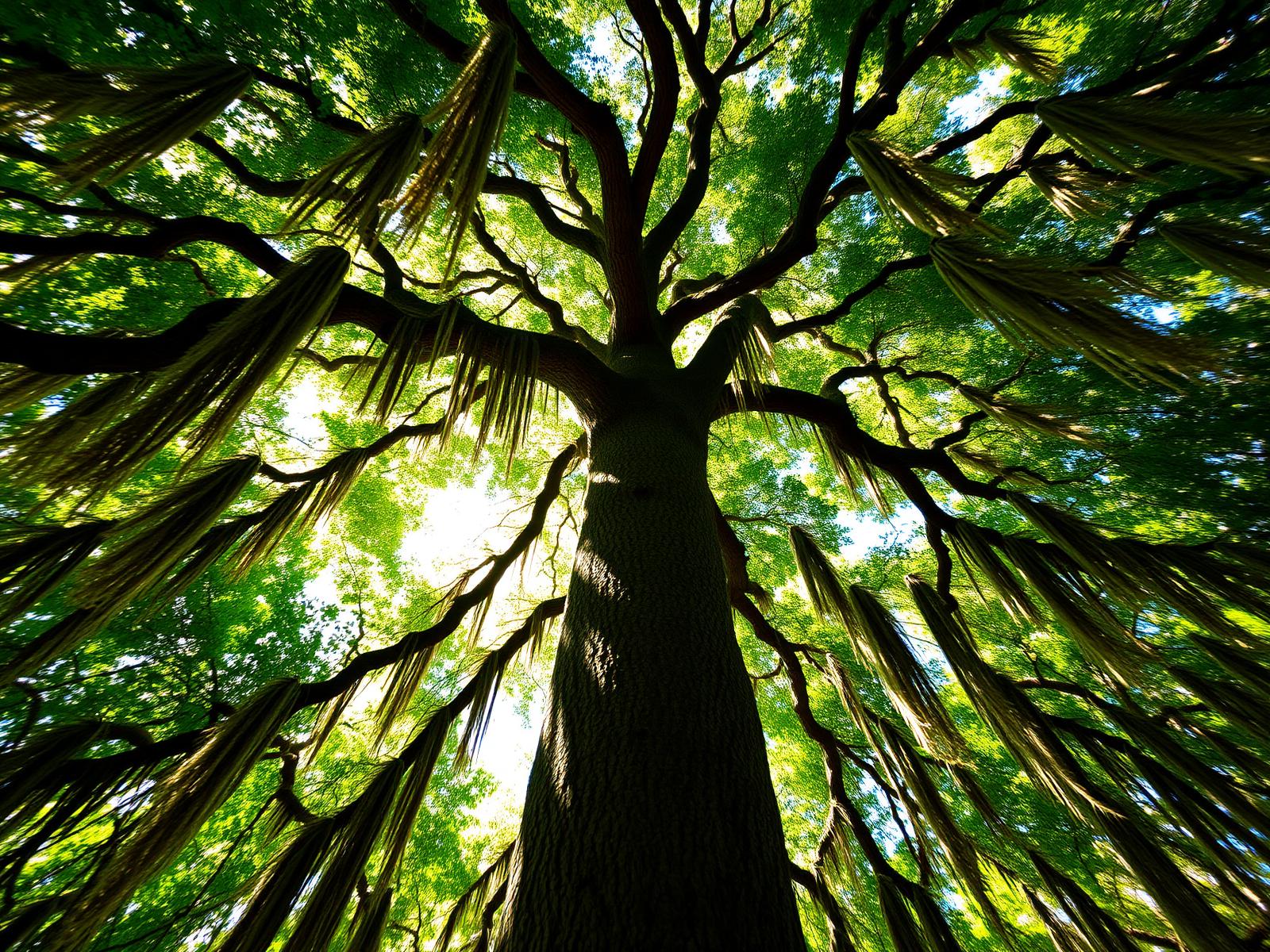
Live oak is the default Florida shade tree, and for good reason — it is long-lived, hurricane-tolerant, beautiful, and supports more wildlife than virtually any other species in the state. But a yard planted entirely with live oak is fragile in ways a mixed canopy is not. Different species mean different growth rates, different canopy shapes, different disease vulnerabilities, and a built-in succession plan if one tree hits trouble.
What follows is our short list of Florida-native shade trees worth planting alongside (or instead of) another live oak. All are commercially available in 30-gallon to field-grown sizes from reputable Florida nurseries.
1. Southern Magnolia (Magnolia grandiflora)
Evergreen, glossy, with large fragrant white flowers in late spring and early summer. Mature height 60–80 feet; canopy spread 30–50 feet. Slow but extremely long-lived — a well-placed magnolia is a 200-year decision. Excellent central specimen for a front yard or as a screening tree along a property line.
Cultivars worth considering: 'Bracken's Brown Beauty' for tighter habit, 'Little Gem' for smaller lots (still 20–30 feet at maturity).
2. Bald Cypress (Taxodium distichum)
Deciduous conifer with soft, feathery foliage and a brilliant rust-orange color in late fall. Mature height 60–100 feet; pyramidal when young, broadening with age. Tolerates wet feet better than almost any other shade tree — and contrary to common belief, thrives in regular well-drained yards too. The 'knees' (root protrusions) only form in saturated soils.
Cypress is the most underused great tree in Florida landscapes. Plant one. You will thank yourself in fifteen years.
3. Red Maple (Acer rubrum)
The fastest-growing native on this list — 2 to 3 feet per year under good conditions. Best fall color south of the Mason-Dixon line, ranging from yellow to deep crimson depending on individual genetics and soil pH. Prefers moist soils and is unhappy in dry, alkaline conditions, so site selection matters.
The Florida-adapted variety (Acer rubrum var. trilobum) handles heat and humidity better than nursery stock imported from northern states.
4. Sweetgum (Liquidambar styraciflua)
Star-shaped leaves, stunning multi-color fall display, and fast growth — 2 feet per year is typical. Mature height 60–80 feet. The seed pods (the spiky 'gumballs') are polarizing; if you do not want them in the yard, plant the sterile cultivar 'Rotundiloba,' which has rounded leaves and no fruit.
5. Sabal Palm (Sabal palmetto)
Florida's state tree. Not technically a shade tree in the broad-canopy sense, but it earns its spot for being utterly hurricane-proof, drought-tolerant, salt-tolerant, fire-tolerant, and culturally inseparable from every Florida landscape. Group three to five at varying heights for a cluster effect — sabal palms read best in groves, not as solitary specimens.
Honorable mentions
- Dahoon Holly (Ilex cassine) — evergreen, red berries, excellent for wildlife.
- American Elm, Florida variety (Ulmus americana var. floridana) — Dutch elm disease has been less severe in Florida; worth the risk.
- Slash Pine (Pinus elliottii) — fast, tall, evergreen, the dominant native conifer of the Florida flatwoods.
- Florida Maple (Acer floridanum) — better drought tolerance than red maple, smaller habit.