Removals, done with control.
Some trees can't be saved. When that's true, removal is engineering — not just sawing. We plan the descent of every limb.
What this is.
We will always tell you first whether a tree can be saved. Most can. But when a tree is structurally compromised, dead, dying, or fundamentally in the wrong place, removal is the responsible call.
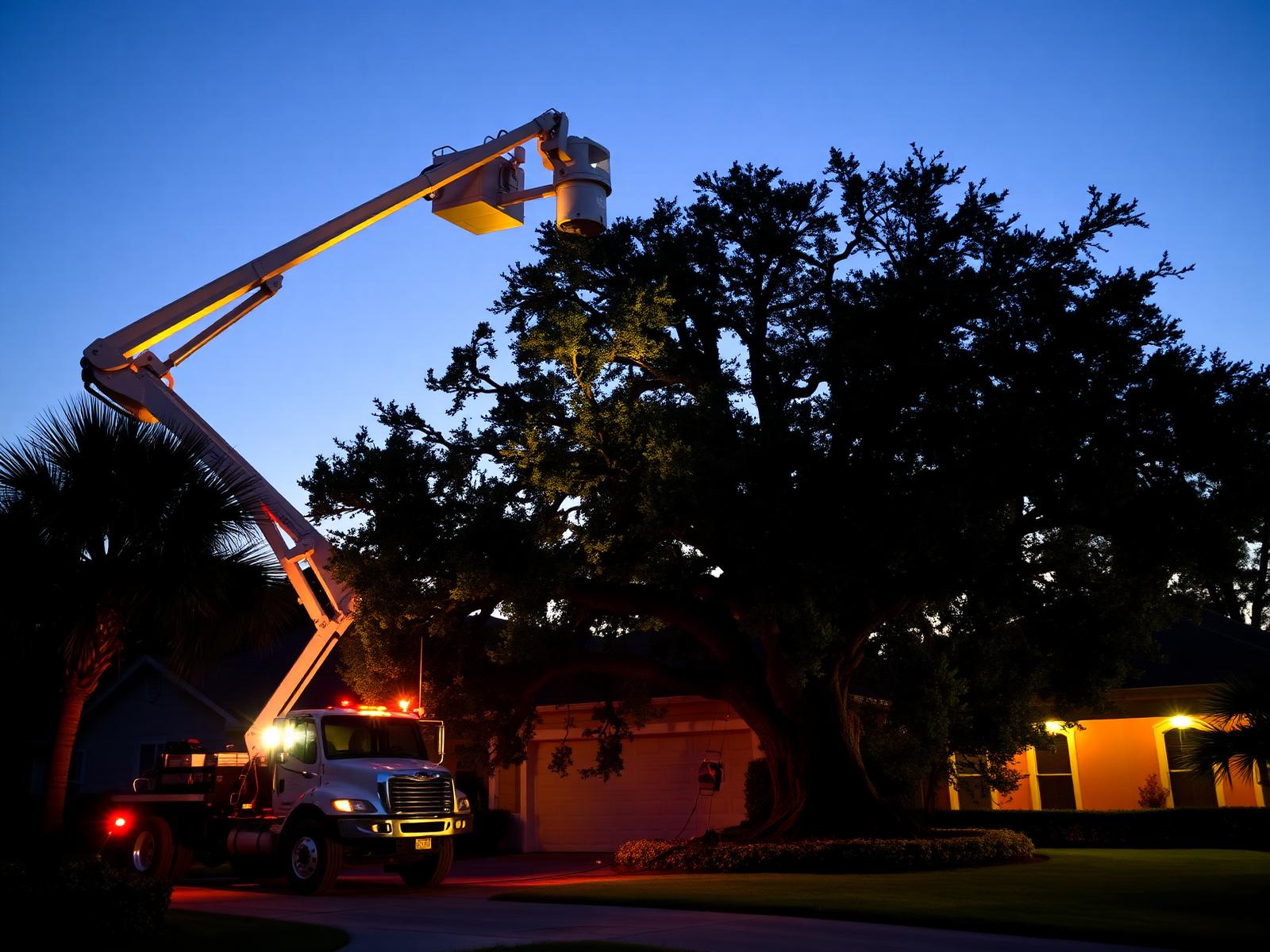
Our removals use the right equipment for the site: technical climbing and rigging in tight yards; bucket trucks where access allows; cranes for the heavy, dangerous, or roof-adjacent jobs.
We carry full general liability and workers' comp. We pull permits where they're required and handle the paperwork. You don't have to think about the logistics — that's our job.
Scope of work.
Hazard tree removal
Compromised, leaning, or root-failed trees handled before they fall on something.
Dead & dying removal
Trees beyond recovery, removed cleanly to make room for replanting.
Crane-assisted takedown
For mature trees, roof-adjacent stems, or jobs too risky to climb.
Tight-access removal
Pieced-down with rigging for fenced yards, pool decks, and zero-lot lines.
Lot clearing
Pre-construction and post-storm clearing — trees, brush, debris hauled off.
Permitting & paperwork
We pull required municipal permits and handle the protected-tree process.
A repeatable process, every time.
- 01
Site assessment
Drop zones, rigging points, equipment access, hazards.
- 02
Plan & permit
Written scope, written quote, permits filed where required.
- 03
Controlled takedown
Climber, bucket or crane. Every limb has a plan.
- 04
Cleanup & grind
Debris hauled, ruts repaired. Stump grinding available next-day.
A removal is a one-shot job. Get it right.
The difference between a clean removal and a bad one is a ruined roof, a totaled fence, or an injured climber. We staff every job with the people and equipment to make it boring — which is exactly what you want.
Often pairs with.
Ready when you are.
Most engagements begin with a free walkthrough. Tell us what you're seeing — we'll come look.