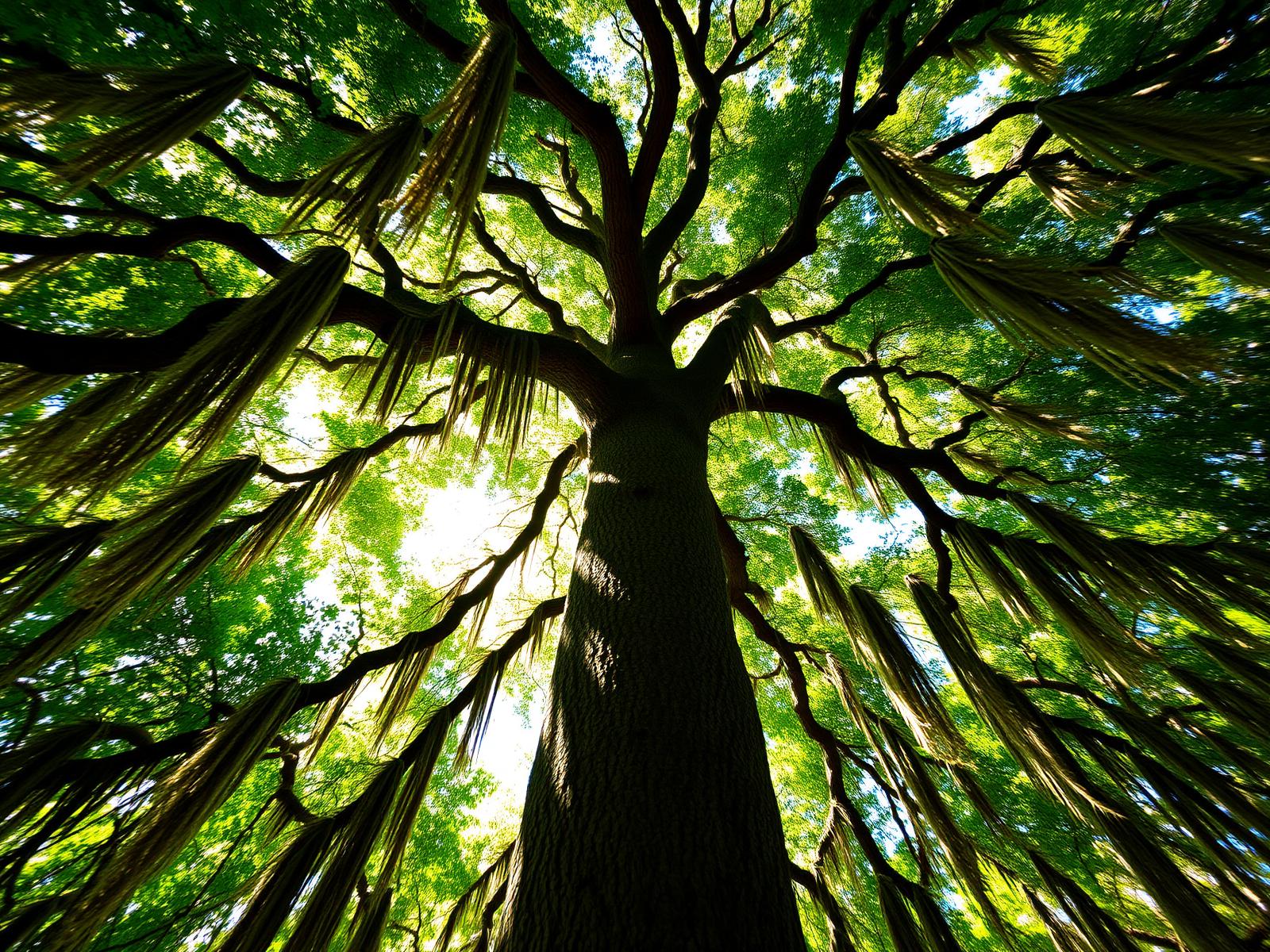
A mature live oak (Quercus virginiana) is a 200-year asset. It is also the tree most likely in Florida to be ruined by well-intentioned trimming — usually a 'cleanup' that removes 40% of the canopy, opens decay pathways, and triggers the exact storm vulnerability the homeowner was trying to fix.
This piece is the working field guide our crews use for oak pruning. It applies to live oak, laurel oak (Quercus laurifolia), water oak (Q. nigra), and southern red oak (Q. falcata) — the four oaks that account for almost all of Florida's residential canopy.
When to trim: the dormant window
Prune oaks in Florida between November and February. There are two reasons, and both matter.
First, oak wilt — a fungal disease (Bretziella fagacearum) spread by sap-feeding beetles in the genus Colopterus and Carpophilus. The beetles are attracted to fresh oak wounds during the warm months (March through October) and can carry the fungus from infected trees. Florida is on the southern edge of confirmed oak wilt range, but cases have been documented from the Panhandle into central Florida. Pruning in the dormant window — when the beetles are not flying — eliminates the primary infection vector.
Second, dormant pruning is metabolically cheaper for the tree. Stored carbohydrates are intact, the tree is not actively allocating resources to leaves and growth, and wound response in the next spring flush is vigorous.
The four cuts that matter
- Deadwood removal — anything brittle, leafless in growing season, or with bark sloughing. Always justified, any time of year (oak wilt risk is low on dead wood).
- Crossing and rubbing branches — remove the smaller of two crossing limbs at the branch collar.
- Co-dominant leader correction — on young trees (under 25 ft), subordinate one of the competing leaders by shortening it, not removing it. On mature trees, never remove a co-dominant leader; install a structural cable instead.
- End-weight reduction — shortening overextended horizontal limbs back to a lateral branch at least one-third the diameter of the cut. This reduces lever-arm failure risk without removing the limb.
The cut itself: branch collar, three-cut method
Every cut larger than thumb-thick should be made just outside the branch collar — the raised ring of tissue where the branch meets the trunk or parent limb. Cutting flush with the trunk removes the collar and disables the tree's ability to compartmentalize the wound. Cutting too far out leaves a stub that decays back into the trunk.
For any limb over two inches diameter, use the three-cut method to prevent bark tearing: undercut 12 inches out from the collar (one-third through), top cut one inch beyond the undercut (limb falls clean), then the final cut at the collar with the weight already removed.
How much to remove
Never more than 25% of the live canopy in a single year on a mature oak. Past 25%, the tree depletes stored reserves trying to replace photosynthetic capacity, vigor declines, and you frequently see epicormic sprouting — the burst of vertical 'water sprouts' from the trunk and major limbs that indicate stress. Those sprouts are weakly attached, fail in storms, and have to be re-pruned for years.
On a young oak (under 15 years), the same 25% ceiling applies, but structural pruning at this age pays back disproportionately. The cuts you make at 10 years prevent the failures at 60.
What never to do
- Never top an oak. Topping creates entry points for Hypoxylon canker and predictable structural failure within a decade.
- Never 'lion-tail' an oak — stripping interior foliage and leaving puffs of leaves at the branch ends. This concentrates wind load at the worst possible point and is the leading cause of summer thunderstorm limb failures in central Florida.
- Never make a flush cut. The collar is the tree's seal against decay; removing it disables that seal.
- Never use climbing spikes on a tree you intend to keep. Spike wounds are permanent decay vectors.
Hiring it out
Florida does not license tree workers at the state level (it licenses landscape architects and certified pest control operators, neither of which is the relevant credential). The credential that matters is ISA Certification — specifically ISA Certified Arborist and, for risk assessment, the TRAQ qualification. Ask for the certificate number and verify it at isa-arbor.com before signing a contract. A crew without a single ISA-certified arborist on the truck is not the right crew for an oak you intend to keep.