
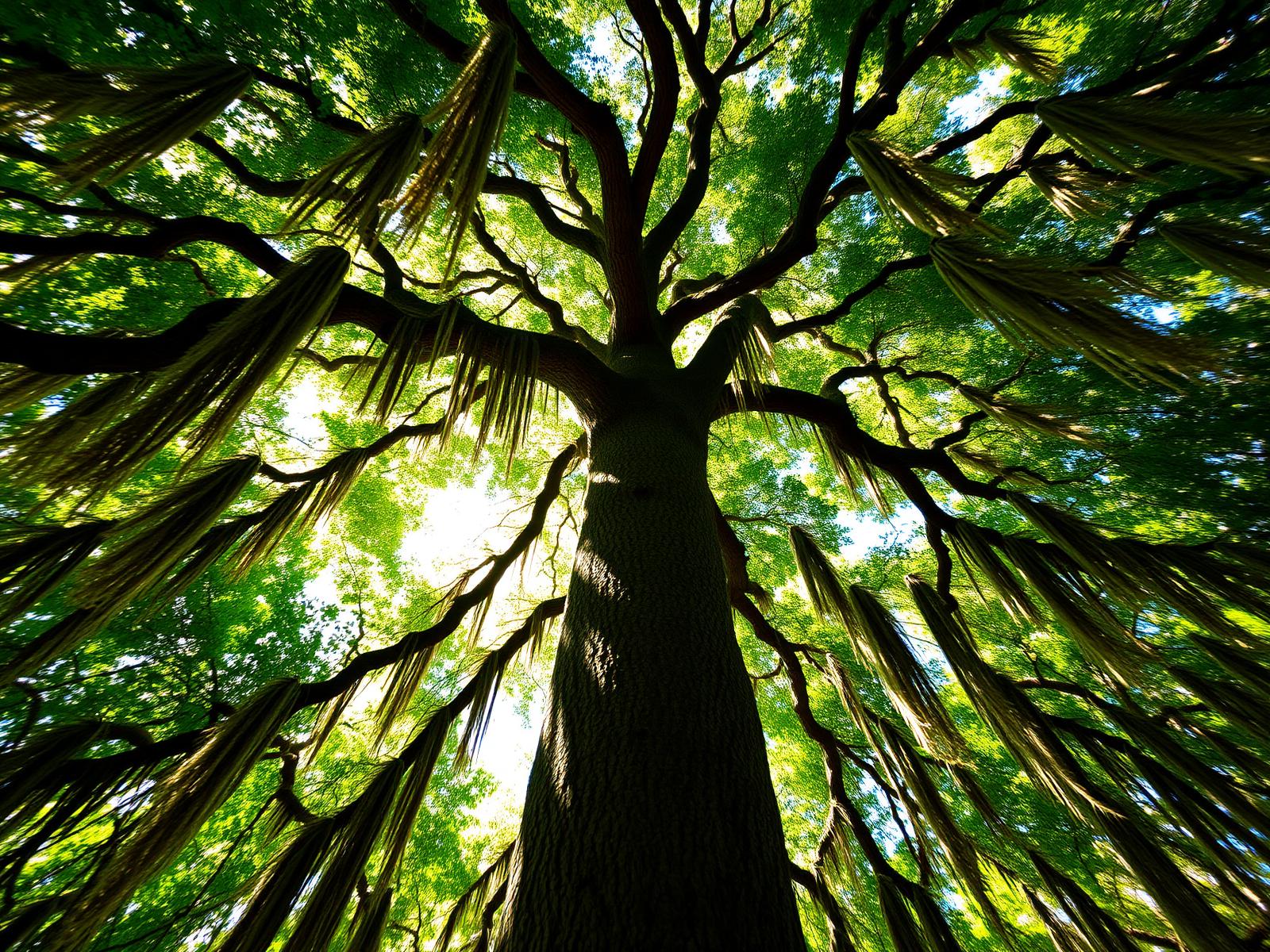
The Florida live oak (Quercus virginiana) is the keystone canopy species of the southeastern coastal plain. It is also the species most often misrepresented in Florida landscaping — sold as a 'fast grower' to fill space, planted in soil it will outgrow, and pruned as if it were an ornamental. The reality is more interesting and more demanding than the brochure.
Growth rate, accurately
Live oak is a moderately fast grower in its first 30 years and a slow grower thereafter. The numbers, from long-term Florida and Georgia growth plots:
- Year 1–5 (establishment): 1–2 ft per year of height growth.
- Year 5–20 (juvenile vigor): 2–3 ft per year of height growth; trunk diameter 0.5–1 in per year.
- Year 20–50 (structural maturity): height growth slows to 1 ft per year; trunk continues at 0.5 in per year; canopy spreads laterally faster than vertically.
- Year 50–150 (mature spreading phase): height growth essentially stops at 60–80 ft; canopy spread can exceed 100 ft; trunk continues thickening at roughly 0.25 in per year.
- Year 150+ (old growth): trunk thickening continues at a declining rate; canopy reaches maximum spread; characteristic horizontal limb architecture develops fully.
A live oak planted today as a 30-gallon, 10 ft container tree will reach roughly 30 ft of height and 25 ft of canopy spread in 15 years under typical Florida conditions. It will not be 'big' in any meaningful sense for 40 years, and it will not be the cathedral-canopied oak from the postcards for 100.
Real lifespan
Healthy, undisturbed live oaks in Florida regularly exceed 300 years. The Cellon Oak in Alachua County is verified at over 350 years. The Treaty Oak in Jacksonville is estimated at 250+ years. Texas's Goose Island Oak is over 1,000 years old. These are not edge cases — they are the normal lifespan when the tree is not killed by people first.
In urban and suburban Florida, the average mature live oak lasts 80–150 years before being removed. The cause of removal is almost never natural death. It is, in order of frequency: construction damage to the root zone, hurricane-related failure of structurally compromised wood, Hypoxylon canker following drought or wound stress, and conflict with infrastructure (foundations, sewer lines, sidewalks, swimming pools).
What accelerates and what decelerates growth
Growth accelerators (in order of effect):
- Adequate soil volume — a live oak needs roughly 1,000 cubic feet of uncompacted soil per 100 sq ft of intended canopy. Most urban planting pits provide a fraction of this.
- Deep, infrequent irrigation during the first 3 establishment years — daily shallow watering produces shallow roots and a smaller tree at maturity.
- 3 inches of organic mulch (pine straw or hardwood) maintained from trunk to dripline, kept 6 inches off the trunk.
- No turfgrass within the dripline — grass competes for water and nitrogen and limits oak root expansion.
- No fertilizer in the establishment years — live oaks evolved on lean, sandy soil and respond to balanced fertilizer with weak, fast growth that is vulnerable to wind and pests.
Growth decelerators:
- Soil compaction — driving, mowing, foot traffic, or construction equipment within the dripline reduces oxygen diffusion and stunts roots.
- Trenching for utilities — cutting major roots can reduce canopy growth for the next decade.
- Over-fertilization with high-nitrogen turfgrass programs — produces leggy growth and predisposes to Hypoxylon.
- Volcano mulching — mulch piled against the trunk causes bark rot and basal decay.
- Topping or repeated over-pruning — every cut over 4 inches diameter is decay potential.
What to expect at each stage
First 3 years
Plant in fall (October–December) for best establishment. Stake only if needed for stability; remove stakes at 18 months. Water deeply (15 gallons) once per week in dry periods, never daily. Expect to see vigorous spring flush in year 2.
Year 3–10
Structural pruning window. This is when you correct co-dominant leaders, establish a single central leader, and remove crossing branches before they become structural problems. Annual visits by a certified arborist in this window pay back disproportionately.
Year 10–30
The tree begins to express its mature architecture. Continue minor structural pruning every 3–5 years. The first significant storm tests come in this window; trees with good juvenile structural work outperform dramatically.
Year 30+
Maintenance pruning becomes deadwood removal, end-weight reduction on overextended limbs, and risk assessment. Major structural pruning is no longer safe — the tree's architecture is set.
What live oaks are not good at
- Tight planting pits in pavement — they will eventually heave the pavement and either be removed or destroy the hardscape.
- Lawn-irrigation regimes — the daily shallow watering most lawns receive produces oak roots near the surface, which is the leading cause of trip-hazard sidewalk lift.
- Container life — live oaks should not stay in containers more than 2 years; girdling roots establish quickly.
- Coastal exposure within 100 ft of saltwater — they tolerate salt spray but not direct salt soil contact.
Plant for the right place, plant fewer than you think you need, and plant them with a 60-year horizon in mind. That is the live oak in summary.