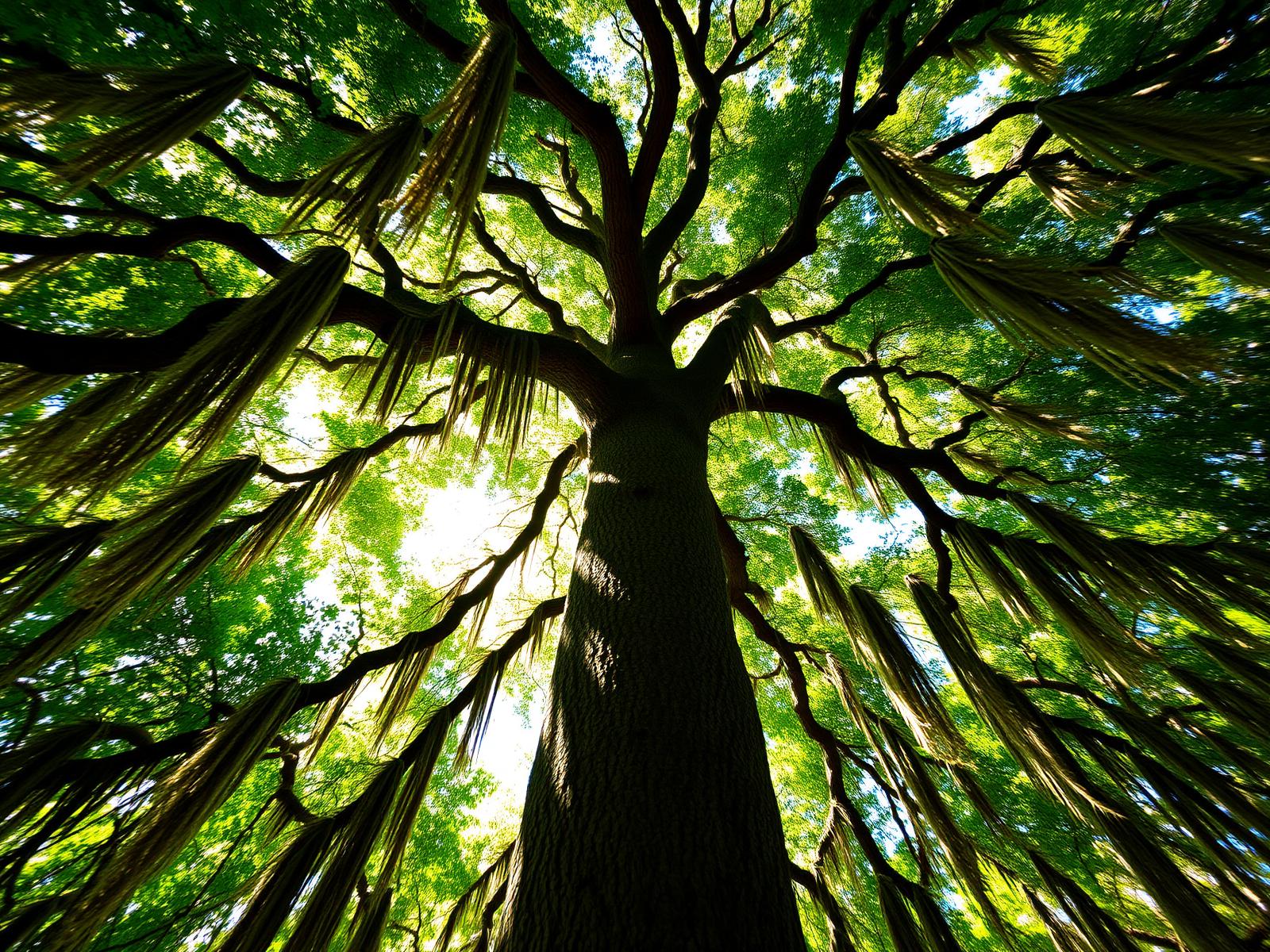
Pines define Florida's natural canopy almost as much as oaks do. They cover 50% of the state's forested land. In residential settings they are also the species most likely to surprise homeowners during a storm — fast-growing, shallow-rooted in some species, decay-prone when wounded, and frequently planted in conditions that guarantee long-term problems.
This is a working guide to the six Florida native pines, their identification, their characteristic failure modes, and what a homeowner with one in the yard should actually do about it.
Slash pine (Pinus elliottii)
The most common pine in central and south Florida residential landscapes. Two-needle clusters (occasionally three) 7–10 inches long; reddish-brown plated bark; tall, straight trunk to 100+ ft; small cones 3–6 inches. Native to flatwoods and pine plantations across the peninsula.
Risk profile
Slash pine has a shallow lateral root system optimized for sandy, saturated soils. In urban settings with compacted or disturbed soil, the root plate is the weakest point — uprooting in saturated conditions with sustained Cat 2+ winds is the typical failure mode. The trunk itself is strong; complete trunk failure is rare unless decay is present.
Slash pine is also the primary host of southern pine beetle (Dendroctonus frontalis) and Ips engraver beetles. A stressed slash pine (drought, fire damage, root disturbance, mechanical wound) is vulnerable to beetle attack and can die within weeks once colonized.
Longleaf pine (Pinus palustris)
The historic dominant of the southeastern coastal plain. Three-needle clusters 8–18 inches long (the longest of any Florida pine); large cones 6–10 inches; distinctive 'grass stage' as a seedling — looks like a tuft of grass for 3–7 years while it builds a taproot. Deeply furrowed, plated bark on mature trees.
Risk profile
Longleaf is the most wind-resistant pine in Florida. Deep taproot, strong wood, sparse and aerodynamic crown. Failures are typically related to age or to construction-era root damage that becomes visible decades later. Resistant to most beetle pressure if not stressed.
If you have a mature longleaf on your property, you have a structurally exceptional tree. Protect it like one.
Sand pine (Pinus clausa)
Smaller pine, 30–60 ft, two-needle clusters 2–4 inches long, small persistent cones that remain closed for years (serotinous). Native to the Florida scrub — the deep sandy uplands of the central ridge. Often planted in residential developments built on former scrub habitat.
Risk profile
Short-lived (60–80 years) and structurally weak compared to other Florida pines. Multi-stemmed forms common; co-dominant leaders frequent. Failure mode is usually trunk snap in major wind events, not uprooting. Often best managed by planned removal and replacement before reaching the failure-prone end-of-life phase.
Loblolly pine (Pinus taeda)
Common in north Florida and the Panhandle. Three-needle clusters 6–9 inches; cones 3–6 inches with sharp prickles; reddish-brown bark. Fast grower, often planted for quick screening or in plantation forestry.
Risk profile
Faster growth than slash or longleaf, less storm-resistant than longleaf, similar beetle vulnerability to slash. Often grows into power lines because of speed and ultimate size; placement is the most common problem.
Pond pine (Pinus serotina)
Three-needle clusters 5–8 inches; serotinous cones; specialist of wet flatwoods and pond margins. Distinguished by ability to resprout from the trunk after fire — most pines cannot. Rarely planted ornamentally; more often encountered on naturally wooded lots in north and central Florida.
Spruce pine (Pinus glabra)
Two-needle clusters 2–4 inches; smooth gray bark on young trees (atypical for pines, hence the 'spruce' name); restricted to north Florida hardwood hammocks. Uncommon in landscaping; treat as a high-value find when present.
Care principles for all Florida pines
- Do not disturb the root zone. Trenching, paving, parking, or construction within the dripline triggers a 5–10 year decline pattern. Most 'sudden' pine deaths trace to root damage years earlier.
- Do not over-water. Pines evolved on lean, dry sites. Daily lawn irrigation in the root zone produces shallow root systems and predisposes to Phytophthora root rot.
- Do not over-prune. Pines do not respond well to heavy pruning — they cannot generate new branches from old wood. Remove only deadwood and limbs threatening structures; leave the rest.
- Do not wound the trunk. Mower damage, weed-trimmer scarring, and decorative spike-lighting all create entry points for pine beetles and decay fungi.
- Watch for beetle activity. Reddish-brown boring dust on bark, popcorn-like pitch tubes, or 'fade' (browning of needles top-down) signals infestation. Once visible, the window to save the tree is short and may require licensed pesticide application or removal to protect adjacent pines.
When to remove
- Visible pine beetle attack with active fade — usually unsalvageable.
- Significant trunk decay, conks, or hollowing — structural risk; remove before storm season.
- Severe lean (10+ degrees) with soil heaving on the opposite side — root plate failure is imminent.
- Sand pine over 50 years old with multi-stemmed structure adjacent to structures — managed removal is safer than waiting for storm failure.
- Any pine within striking distance of a house that has shown significant canopy thinning in the past 24 months.
What to plant when replacing
If site and budget allow, plant longleaf pine. It is the most storm-resistant native, the longest-lived, the most fire-adapted, and the most ecologically valuable (host to the endangered red-cockaded woodpecker). It is slower than slash for the first 10 years (because of the grass stage) and then catches up rapidly. The 30-year tree is structurally superior to anything else you can plant in its place.